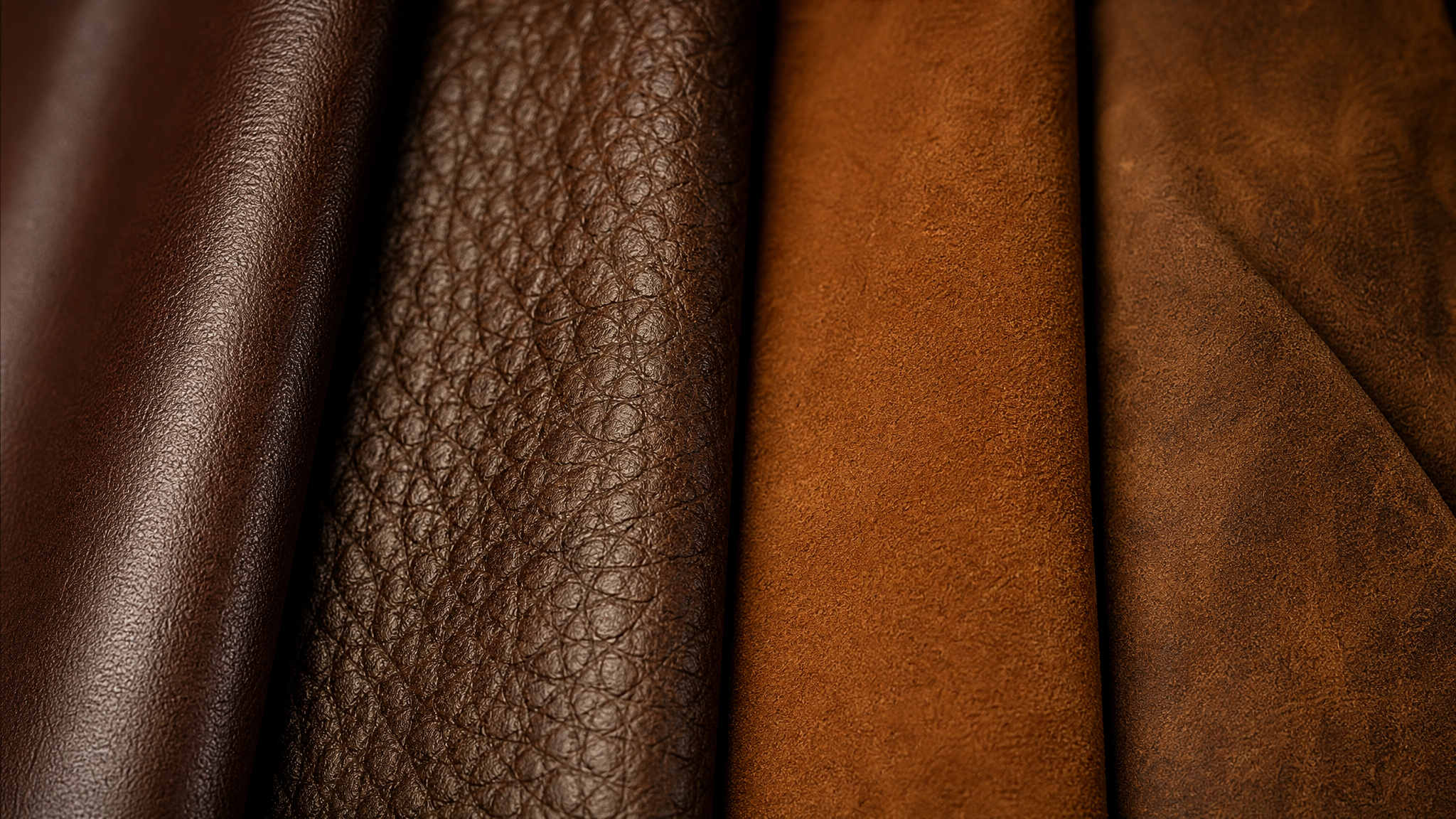
Materials · Leather Guide
Choose the Hide Before the Shoe
Price point, durability expectation and end retail positioning all start at the leather — not at the last, and not at the construction. This guide sets out the industry's standard grading vocabulary: the same words Y&F Leather uses to quote every program on this site.
Why the material comes first
Two quotes are only comparable when the grade is named
Most supplier catalogs lead with silhouettes and bury the hide in a single spec line. Two quotations can look comparable while resting on entirely different materials — one on full-grain, one on a heavily corrected hide or a coated synthetic — and the difference tends to surface only after samples have been paid for and a production slot booked.
Graded naming is what makes quotes comparable across factories and across markets. When a supplier names the grade — full-grain, top-grain, split, nubuck — thickness, finish and price begin to line up against each other. Treat any listing pitched only as “genuine leather” as a conversation opener, not a specification: in international trade the phrase carries no grading meaning, and a supplier who can answer “which grade?” in one sentence is telling you something useful about how they work.
The short version
The grade names the layer of the hide. The finish names what was done to its surface. The tannage names how it was preserved. A complete leather specification names all three — plus a thickness in millimeters.
The grading table
Six terms that cover the trade
These are the working definitions used on every specification table across this site. Codes in the second column appear verbatim in our product specs.
| Grade | Code | What it is | Durability | Look & finish | Typical range position | Price tier |
|---|---|---|---|---|---|---|
| Full-Grain | FG-01, FG-02 | The outer layer of the hide, used with the grain surface intact — unsanded, uncorrected. | Highest. The uninterrupted grain fibers carry the load; the surface burnishes rather than wears out. | Natural grain with visible character; develops a patina with age. | Premium dress and boot programs. | Premium |
| Top-Grain | TG-01 | The outer layer, lightly sanded or corrected to clear natural defects, then refinished. | High — marginally below full-grain where the surface was corrected. | Even color and texture; takes every finish consistently. | The volume core — balanced styles across the whole range. | Balanced |
| Split & Suede | SP-01 | The layer beneath the top grain. Brushed, it raises the nap called suede. | Good for its class — the nap wears, the structure holds. | Matte velvet nap; the widest color space in the range. | Value and seasonal programs. | Value |
| Nubuck | NB-01 | The outer layer finely brushed on the grain side to raise a short velvet nap. | Strong — grain-side fiber density under a velvet surface. | Velvet hand, low-sheen matte; reads richer than suede at equal weight. | Premium casual programs. | Premium casual |
| Corrected-Grain | Per project | Grain heavily corrected, embossed with an artificial pattern and coated. | Serviceable — the coating does the visible work. | Uniform printed grain under a protective coat. | Occasional entry-tier programs. | Entry — quoted per project |
| PU / Synthetic | — | A man-made coating on a fabric base — no hide layer at all. | Not comparable — there is no hide structure to age. | Fully coated and perfectly regular — the tell, not the selling point. | Outside our quoted range. | Comparison only |
Indicative figures for planning purposes — binding quotation upon specification. PU / synthetic is listed for orientation only: our programs are built on the top-grain and split hide grades above, and corrected-grain hides are quoted case by case.
Buyer education
PU vs. genuine leather — how to tell what you are buying
Polyurethane-coated synthetics have a legitimate place in footwear at entry price points, and there is no dishonesty in selling PU as PU. The problem is PU presented as leather — usually behind that same ungraded “genuine leather” label. When a sample pair arrives, four checks settle the question in minutes.
- Cut edge. Hide shows a dense, fibrous cross-section; PU shows a fabric or scrim layer set between coating films.
- Underside. Hide has a soft fibrous flesh side; synthetic usually carries a woven or knitted textile backing.
- Weight and hand. Hide feels cool to the touch and recovers from a fold; foam-backed synthetic feels lighter and springier for its thickness.
- Paperwork. Ask for the material composition on the specification sheet and a test report with the shipment, rather than relying on the product name.
If a quotation cannot name the grade, the thickness in millimeters and the tannage, what is being quoted is not yet a leather price.
Where PU belongs
At entry price points, as what it is: synthetic. Labeled as such on the specification sheet, it is an honest material. The four checks above exist because somewhere in every market, someone relabels it.
Finish & tanning
The other half of the leather spec
The grade names the layer; finish and tannage describe what was done to it. Both belong on every quotation.
| Term | What it means | Where it fits |
|---|---|---|
| Aniline finish | Transparent dye, no pigment coating — the hide's natural character stays fully visible. | Premium dress programs on cleaner hides. |
| Semi-aniline finish | A light pigment coat adds protection while keeping much of the natural character. | The working middle of our range. |
| Pigmented finish | An opaque coating carries the color and the grain pattern. | The most uniform and the easiest to care for — volume and uniform programs. |
| Chrome tanning | The standard tannage for shoe upper leather; consistent, scalable supply. | Our default across all grades. |
| Vegetable tanning | Plant tannins; the leather develops deeper character with age. | Arranged per program on request. |
Due diligence
What to ask any leather supplier — before the sample, not after
- The grade by name the quotation is based on — full-grain, top-grain, split or corrected — not a trademark and not “genuine leather”.
- Thickness in millimeters, and the tolerance the tannery holds in production.
- Tannage and finish — chrome or vegetable; aniline, semi-aniline or pigmented.
- Whether a material test report can be provided with the shipment, and at whose cost.
- Batch consistency — how shade and temper are matched from one production run to the next, re-order after re-order.
These five questions take one email to send. How we answer them — and how quality control is run across the partner factory network — is summarized on the Quality & Compliance page.
Four grades, four pages
Go one grade deeper
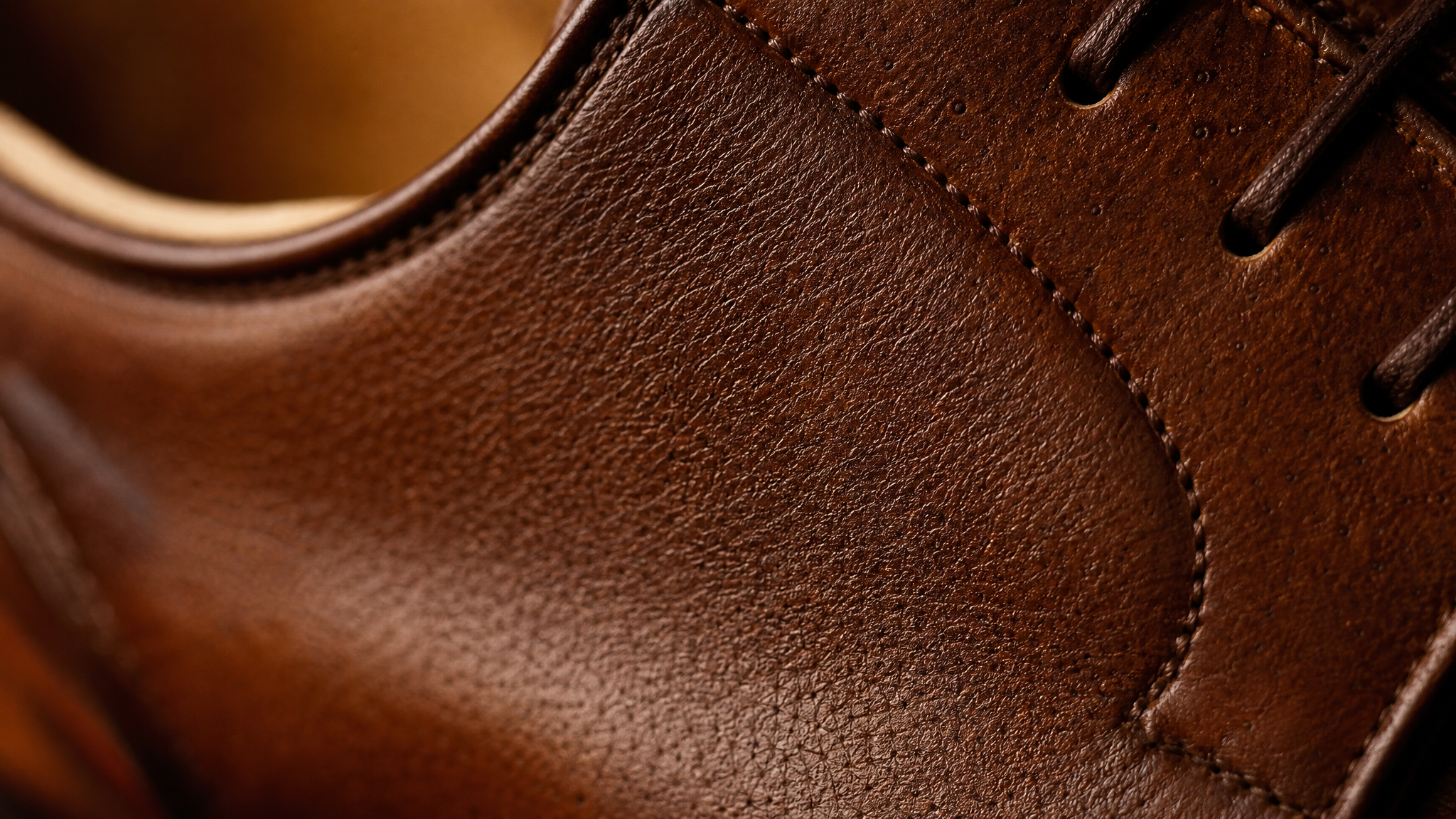
Full-Grain
The strongest cut · Code FG
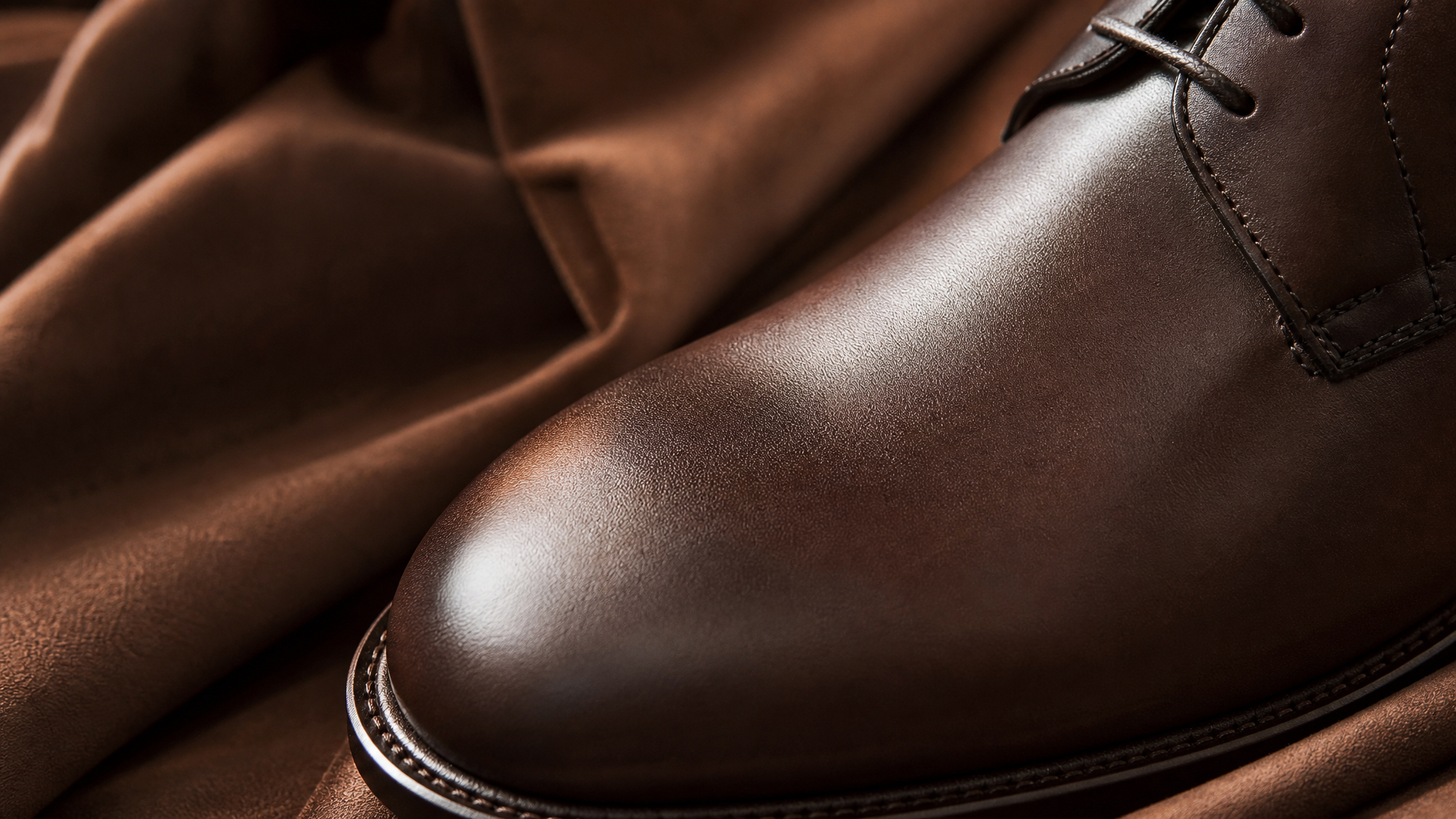
Top-Grain
Uniform and balanced · Code TG
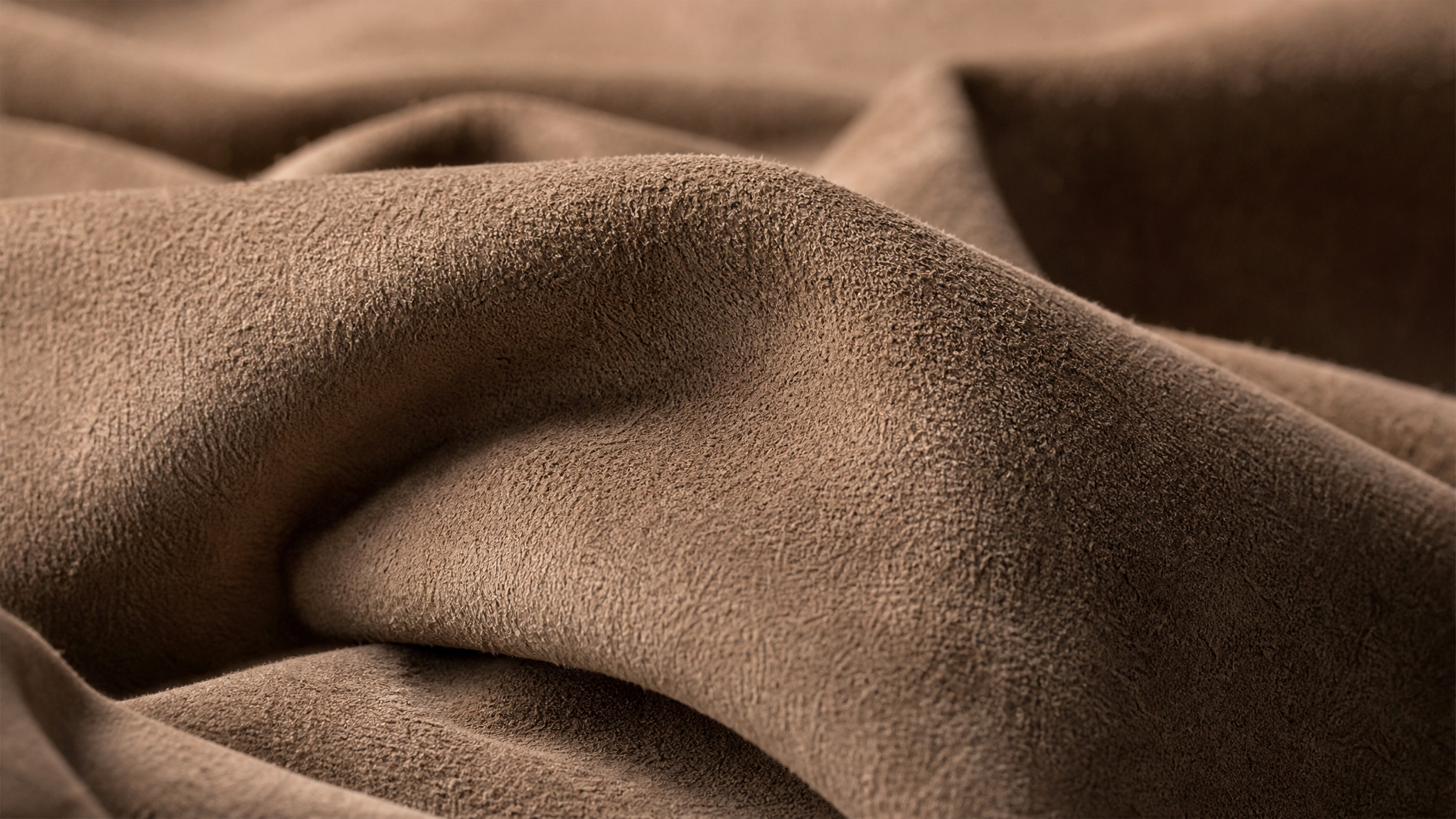
Split & Suede
The value tier · Code SP
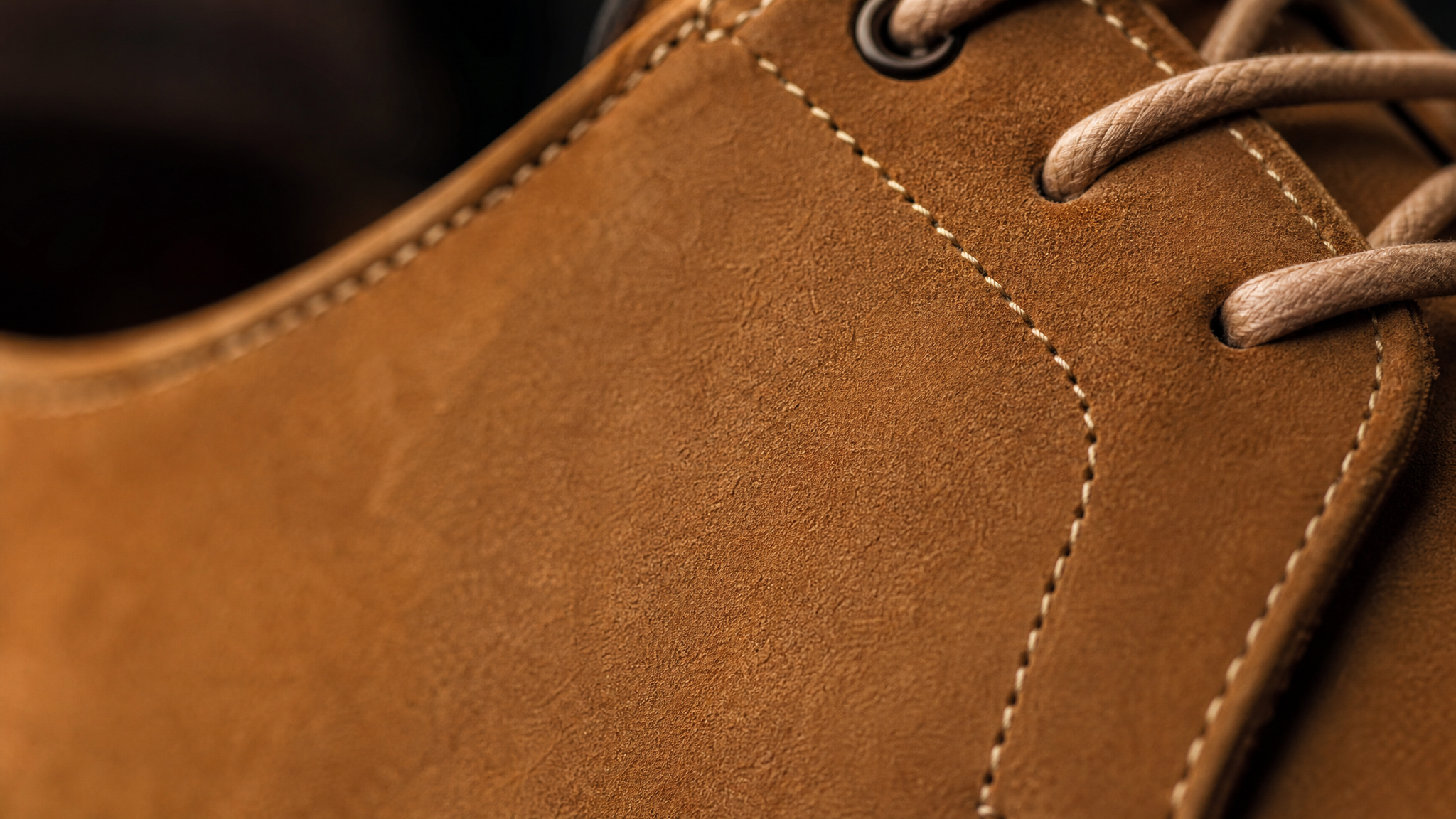
Nubuck
Premium casual · Code NB
The codes FG, TG, SP and NB mark the material on every specification table on this site, next to the construction method.
Ready to put a grade on your program?
Send your target price and your market. We reply with a grade and finish proposal, a sampling plan and indicative costs per pair.