Insights & Guides · Buyer education
Leather Grading, Explained Like a Quotation Depends on It
Because it does. "Genuine leather" is not a grade — it is a floor. Here is the vocabulary that separates a full-grain program from a split-leather one, and why the same oxford can legitimately quote three different prices.
Guide · 8 min read · pairs with the Leather Guide pages
The cut decides the grade
A hide goes into the tannery whole. Slicing it into layers — and deciding what to do with the surface — is what creates the grades. Nothing about this is secret; it is simply rarely explained to buyers before the price is quoted.
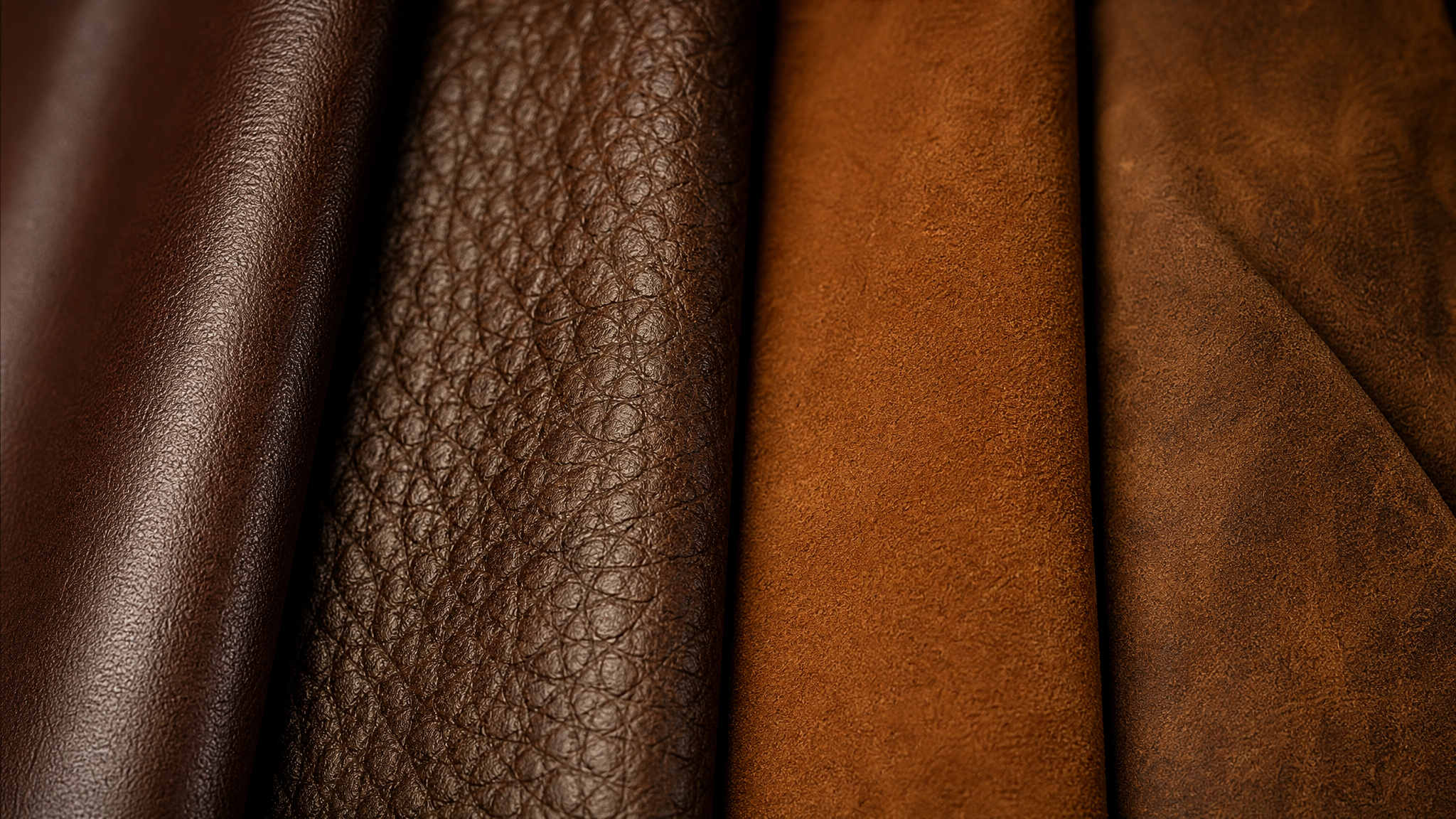
- Full-grain — the outermost layer with the grain surface intact, untouched except for finish. Strongest, most breathable, develops patina. Scars and insect bites stay visible: that is the grade, not a defect.
- Top-grain — the top layer lightly sanded to even out the surface, then finished. Uniform, consistent from hide to hide, slightly less breathable. The volume workhorse of wholesale programs.
- Split & suede — the lower layers cut away from the grain. Sueded for a velvet nap, or embossed with an artificial grain ("corrected" or coated leather lives here too). Lighter body, friendlier price.
- Nubuck — top-grain or full-grain leather buffed on the grain side for a fine velvet. Costs more than suede because it starts from the better layer.
How the grade moves the price of the same shoe
Take one oxford pattern — ours is YF-OX-2601 — and run it on the same last in three tiers. The pattern, lining, sole and labor hold; the upper and the grade behind it move. In indicative terms:
| Upper grade | What changes | Relative price band | Typical program |
|---|---|---|---|
| FG-01 full-grain calf | Natural grain, premium hand feel, brand-story material | Highest | Branded and premium retail programs |
| TG-01 top-grain smooth | Uniform surface, consistent carton-to-carton | Middle | The bulk of wholesale assortments |
| SP-01 split suede 1.4 mm | Velvet nap, seasonal colors, lighter body | Entry | Seasonal color programs, price-led ranges |
Bands are indicative examples, not quotations — leather markets move; your program specifics decide.
Three questions that make any two quotations comparable
- "Which layer, and what finish?" — full-grain, top-grain or split, and is the grain natural or embossed? One answer moves the price band.
- "What thickness, in millimeters?" — upper leather for dress shoes typically runs around 1.2–1.6 mm; thinner cuts cost less and wear differently.
- "Is the lining the same grade as the upper?" — a full-grain upper over a split lining is a common way to quote "leather shoes" at a leather-shoe price without the leather-shoe material.
Ask these three and a vague quotation either becomes specific or quietly excuses itself.
Where the grades sit in our range
Every style in the 26 series carries a material code on its page — FG, TG, SP or NB — so a line sheet can be compared line by line, not photograph by photograph. Start from the Leather Guide, or jump straight to a tier: full-grain, top-grain, split & suede, nubuck.
Put the vocabulary to work
Send a competitor quotation — we will re-quote it line by line in the same grading terms.